

Introduction
In the demanding world of metal fabrication, precision, speed, and reliability are paramount. Laser cutting machines are at the heart of modern manufacturing, delivering unparalleled accuracy. However, even the most advanced machinery is only as good as its components. Downtime due to unexpected failures or subpar cutting quality can significantly impact your bottom line, causing costly delays and rework. Understanding and managing your Laser Cutting Machine Spare Parts and consumables is not just about maintenance; it’s about safeguarding your operational efficiency and output quality.
This comprehensive guide delves into the crucial role of fiber laser ceramic ring and other essential consumables in optimizing your laser cutting operations. We will explore their purpose, benefits, and critical maintenance tips to ensure your machines run at peak performance. For an immediate resource to streamline your spare parts management, consider to download our comprehensive Spare Parts Checklist.
Download Spare Parts Checklist
Why Spare Parts & Consumables Matter in Laser Cutting
The performance of your fiber laser cutting machine is directly tied to the quality and condition of its spare parts and consumables. These components, often overlooked until a problem arises, are the unsung heroes of consistent, high-quality cuts. Investing in genuine, high-quality components ensures your machine operates within its specified parameters, delivering optimal results every time.
Using low-quality or counterfeit parts can have severe consequences, leading to premature wear, frequent breakdowns, and inconsistent cutting results. Such issues not only halt production but also incur significant repair costs and material waste. Ultimately, machine efficiency is compromised, directly impacting your profitability and reputation in the market. Genuine fiber laser cutting consumables, like those from reputable brands, are engineered to precise specifications, guaranteeing compatibility and longevity.
Complete Overview of Laser Cutting Machine Spare Parts
A laser cutting machine is a complex system, and its longevity and performance depend on the harmonious function of numerous parts. Understanding the different categories of spare parts is essential for effective maintenance and inventory management.
Optical Components (Lenses, Mirrors)
These are perhaps the most critical components for directing and focusing the laser beam. Focusing lenses concentrate the raw laser beam into a fine, powerful point, while mirrors guide the beam through the optical path. Any dirt, scratches, or misalignment can severely degrade cutting quality, affecting kerf width and cut edges.
Mechanical Parts (Nozzles, Bearings)
Mechanical parts facilitate the movement and precision of the cutting head. The nozzle, for instance, directs the assist gas and is vital for maintaining a clean cut. Bearings and guide rails ensure smooth and accurate motion of the cutting head. Worn mechanical parts can lead to inaccurate positioning, vibrations, and poor cut quality.
Electrical Components
This category includes power supplies, control boards, sensors, and cables. These components manage the laser’s power, control the machine’s movements, and ensure safety. Malfunctions in electrical components can lead to complete machine shutdowns or erratic behavior, requiring specialized diagnosis and replacement.
Consumables (Filters, Ceramic Rings)
Consumables are parts designed for regular replacement due to wear or degradation over time. This category includes air filters, water filters, protective windows, nozzles, and critically, the ceramic ring for laser cutting machine. Regular replacement of these fiber laser cutting consumables is crucial for maintaining optimal performance and preventing damage to more expensive components.
| Part | Function | Replacement Cycle |
|---|---|---|
| Focusing Lens | Concentrates laser beam | 6 months – 2 years (or as needed based on inspection) |
| Protective Window | Shields lens from debris | 1-3 months (or as needed based on visual inspection) |
| Nozzle | Directs assist gas, shapes beam | Daily – Weekly (depending on material/power) |
| Ceramic Ring for Laser Cutting Machine | Insulates, provides electrical connection, centers nozzle | 3-6 months (or as needed based on inspection/arcing) |
| Air Filters | Cleans compressed air | 1-3 months (or as needed based on dust levels) |
| Water Filters | Cleans cooling water | 3-6 months |
Types of Laser Cutting Consumables Explained
Understanding the specific function and importance of each consumable is key to proactive maintenance and achieving superior cutting results.
Nozzles (Single & Double Nozzle)
The nozzle is a critical component that shapes the assist gas stream and helps to protect the focus lens from molten splatter. There are primarily two types: Single Nozzle and Double Nozzle. Single Nozzle designs are typically used for thinner materials and offer a focused, high-pressure gas stream. The Double Nozzle, conversely, provides a secondary, wider gas flow that helps to cool the cutting zone and remove slag, making it ideal for thicker materials or specific cutting applications. Choosing the correct nozzle type and maintaining its integrity is paramount for cut quality and piercing stability.
Ceramic Rings
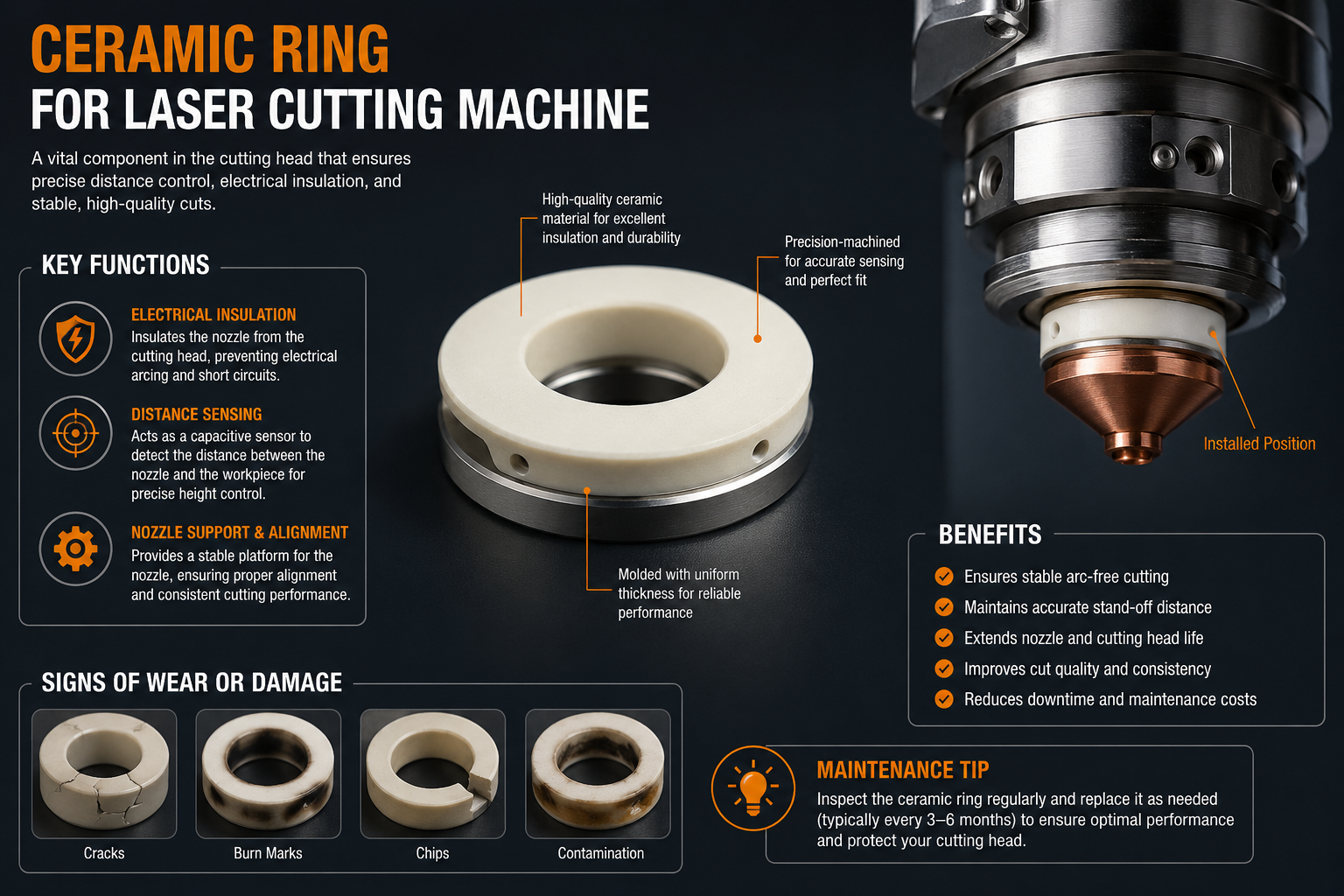
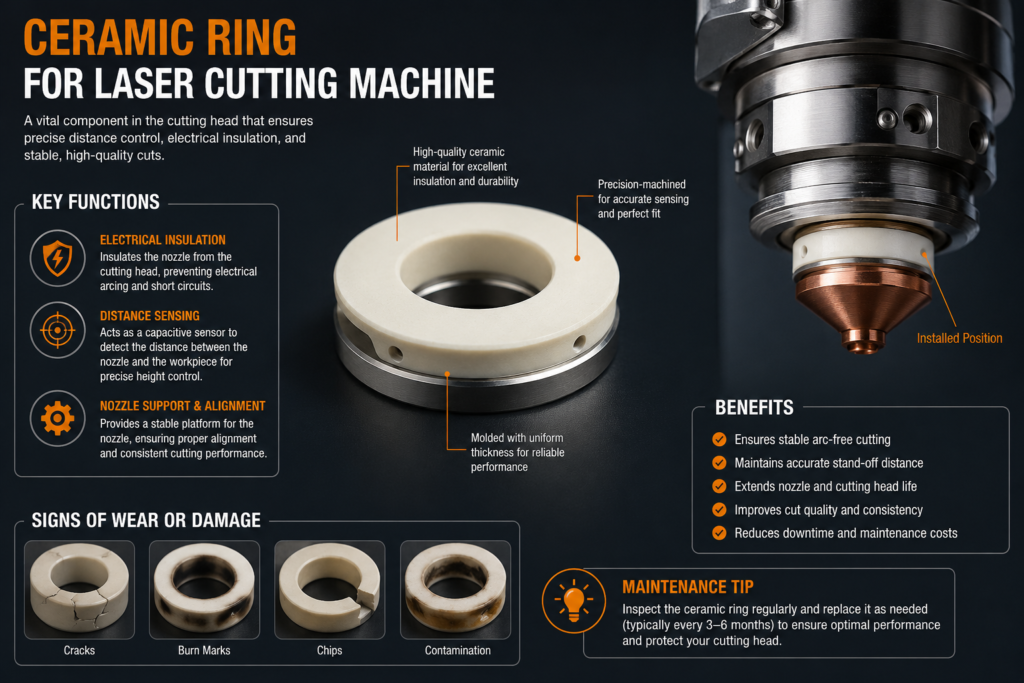
The ceramic ring for laser cutting machine is a small but mighty component in the cutting head. It serves multiple vital functions: electrically insulating the nozzle from the cutting head, providing a stable platform for the nozzle, and, crucially, forming the capacitive sensor that detects the distance between the nozzle and the workpiece. A high-quality fiber laser ceramic ring ensures consistent standoff distance control, which is fundamental for maintaining constant focus and achieving precise cuts. Damage or contamination to the laser ceramic ring can lead to arcing, unstable distance sensing, and ultimately, poor cut quality and potential damage to the cutting head. Brands like Raytools, OSPRI, Precitec, and Fine Focus are renowned for their high-quality ceramic ring for laser cutting machine, ensuring reliability and performance.
Lenses (Focusing and Protective)
While often considered optical components, protective windows are frequently replaced consumables. They shield the more expensive focusing lens from splatter and fumes. The focusing lens itself, though less frequently replaced, can degrade over time due to heat or minor contaminants, impacting beam quality. Regular inspection and cleaning of both are essential, as even minor imperfections can scatter the laser beam and reduce cutting efficiency.
Signs Your Spare Parts Need Replacement
Proactive identification of worn-out parts is crucial to prevent further damage and maintain production quality. Pay close attention to these indicators:
- Poor Cutting Quality: Ragged edges, excessive dross, or incomplete cuts are primary signs. This can indicate a worn nozzle, contaminated lens, or a faulty ceramic ring for laser cutting machine affecting standoff.
- Burr Formation: Increased burrs on the cut edge often point to a worn nozzle or incorrect assist gas pressure, which can be indirectly caused by issues with the ceramic ring‘s integrity affecting the gas flow or standoff.
- Irregular Sparks or Arcing: Sparks emanating from the cutting head, especially around the nozzle, are a strong indicator of a damaged or contaminated laser ceramic ring. Arcing can severely damage the cutting head and halt production.
- Decreased Piercing Speed: If your machine takes longer to pierce materials, it could signal a degraded lens or a worn nozzle.
- Unstable Standoff Distance: Fluctuations in the distance between the nozzle and the workpiece are a clear sign that the ceramic ring for laser cutting machine or its connection is compromised.
- Error Messages: Many modern machines will display error codes related to specific component failures, especially with smart fiber laser ceramic ring components.
What are signs of worn laser cutting parts?
Signs of worn laser cutting parts include poor cutting quality (ragged edges, excessive dross), increased burr formation, irregular sparks or arcing from the cutting head, decreased piercing speed, and unstable standoff distance control. Error messages from the machine’s control system can also indicate component wear or failure.
OEM vs Aftermarket Spare Parts
When it comes to replacing parts, operators face a choice between Original Equipment Manufacturer (OEM) parts and aftermarket alternatives. Each option presents distinct advantages and disadvantages.
| Feature | OEM Parts | Aftermarket Parts |
|---|---|---|
| Quality & Compatibility | Guaranteed exact fit and performance, designed for specific machine models. | Varies greatly; can be good quality but may lack precise fit or material specs. |
| Performance Reliability | Consistent, predictable performance, often backed by manufacturer warranty. | Inconsistent; risk of reduced machine efficiency and premature failure. |
| Cost | Generally higher initial cost. | Often lower initial cost, but can lead to higher long-term expenses. |
| Warranty | Typically covered by machine or part warranty, ensuring peace of mind. | Warranty coverage varies or may be non-existent, often voiding machine warranty. |
| Availability | Directly from manufacturer or authorized dealers. | Wide range of suppliers; may offer quicker availability for some common parts. |
| Risk | Low risk of operational issues or machine damage. | Higher risk of incompatibility, reduced performance, and machine damage. |
While aftermarket parts might offer a lower upfront cost, the long-term implications, including potential for increased downtime, reduced cut quality, and voided warranties, often outweigh the initial savings. For critical fiber laser cutting consumables like the ceramic ring for laser cutting machine or nozzles, OEM or branded alternatives are almost always the superior choice for consistent performance and machine longevity.
How to Choose High-Quality Spare Parts Supplier
Selecting the right supplier for your fiber laser cutting machine spare parts and consumables is as crucial as selecting the parts themselves. A reliable supplier ensures you receive genuine, high-performance components that extend the life and efficiency of your machinery.
- Certifications and Quality Assurance: Look for suppliers who can provide certifications for their products, ensuring they meet international quality standards. This is particularly important for precision components like lenses and ceramic ring for laser cutting machine.
- Brand Compatibility: Ensure the supplier offers parts compatible with leading laser head brands such as Raytools, OSPRI, Precitec, and Fine Focus. Reputable suppliers will explicitly state compatibility and often stock genuine branded consumables. Using branded consumables from these manufacturers guarantees a seamless fit and optimal performance, minimizing risks of malfunction.
- Technical Support and Expertise: A good supplier offers more than just parts; they provide expert technical support. This includes assistance with part identification, installation guidance, and troubleshooting. Their knowledge of fiber laser ceramic ring specifications or appropriate nozzle types can be invaluable.
- Inventory and Logistics: Check for a supplier with a robust inventory and efficient logistics to minimize lead times, especially for frequently replaced fiber laser cutting consumables.
- Reputation and Reviews: Seek out suppliers with positive industry reputations and customer reviews, indicating reliability and satisfaction.
Maintenance Tips to Increase Machine Life
Proactive maintenance is the cornerstone of maximizing your laser cutting machine’s lifespan and ensuring consistent, high-quality output. Neglecting regular upkeep can lead to costly repairs and significant downtime.
- Cleaning Lenses and Protective Windows: Regularly inspect and meticulously clean all optical components using specialized lens paper and cleaning solutions. Even minute dust particles or splatter can scatter the laser beam, reducing power and cutting quality. Replace protective windows as soon as they show signs of pitting or haze.
- Checking Nozzle Alignment and Condition: The nozzle must be perfectly centered with the laser beam and free from wear or damage. Check alignment daily and replace the nozzle regularly, especially when cutting thick or highly reflective materials. Whether it’s a Single Nozzle or Double Nozzle, consistent monitoring is key.
- Replacing Ceramic Ring for Laser Cutting Machine Regularly: The laser ceramic ring is a critical consumable. Inspect it for cracks, carbon buildup, or signs of arcing. Even small defects in the fiber laser ceramic ring can lead to unstable height sensing, affecting cut quality and potentially damaging the cutting head. Adhere to manufacturer-recommended replacement intervals or replace immediately upon detecting any issue.
- Maintain Cleanliness of the Machine: Keep the entire machine clean, including the cutting bed, dust collection system, and surrounding environment, to prevent debris from contaminating optical components or mechanical parts.
- Check and Replace Filters: Regularly inspect and replace air and water filters to ensure clean assist gas and coolant circulation. Contaminated air or water can severely impact machine performance and component lifespan.
Implementing a rigorous preventive maintenance schedule will significantly enhance your machine’s reliability and operational life. For expert guidance and hands-on support, consider booking a maintenance consultation.
Cost Optimization Strategy
Optimizing costs in laser cutting operations doesn’t mean sacrificing quality; it means strategic planning and smart procurement. By implementing effective strategies, you can reduce operational expenses without compromising performance.
- Bulk Buying Genuine Consumables: Purchasing frequently used fiber laser cutting consumables like nozzles, protective windows, and ceramic ring for laser cutting machine in bulk from trusted suppliers can often lead to significant discounts. This also ensures you have a readily available stock, minimizing downtime waiting for parts.
- Implement Preventive Maintenance: A well-structured preventive maintenance program, as discussed, is a crucial cost-saving measure. It reduces the likelihood of expensive emergency repairs, extends the life of components, and maintains peak machine efficiency, avoiding costly reworks and material waste due to poor cuts.
- Use Genuine and Branded Consumables: While aftermarket parts may seem cheaper upfront, they often lead to higher overall costs due to shorter lifespans, reduced performance, and potential damage to more expensive machine components. Genuine consumables from brands like Raytools, OSPRI, Precitec, and Fine Focus ensure compatibility and superior performance, offering better value in the long run.
- Operator Training: Well-trained operators can identify issues early, perform basic maintenance correctly, and optimize machine settings, all contributing to reduced wear and tear and efficient material usage.
Applications & Industry Use Cases
Fiber laser cutting machines, supported by reliable spare parts and consumables, are indispensable across a wide range of industries due to their precision, speed, and versatility.
- Automotive Industry: Used for cutting various components from chassis parts to intricate interior elements, often requiring high precision and speed for mass production.
- Sheet Metal Fabrication: The backbone of many manufacturing operations, producing custom parts, panels, and structures for diverse applications from construction to signage.
- Aerospace Industry: Critical for cutting lightweight and high-strength materials like titanium and aluminum alloys with extreme accuracy and minimal material waste.
- Medical Device Manufacturing: Produces small, intricate parts with high precision for surgical instruments, implants, and other medical equipment.
- Electronics Industry: Utilized for cutting thin sheets of metal for enclosures, circuit board components, and other sensitive parts.
In all these sectors, the consistent performance facilitated by high-quality fiber laser cutting consumables, especially the ceramic ring for laser cutting machine and nozzles, is paramount to maintaining competitive edge and product quality.
FAQs
1)What is the primary function of a ceramic ring for laser cutting machine?
The primary function of a ceramic ring for laser cutting machine is to insulate the nozzle electrically, provide a stable platform for it, and act as a capacitive sensor for precise distance control between the nozzle and the material being cut.
2)How often should I replace my laser cutting nozzle?
The replacement frequency for your laser cutting nozzle depends on material, power, and operational hours, but it often ranges from daily to weekly. Inspect it regularly for wear, damage, or clogging, whether it’s a Single Nozzle or Double Nozzle.
3)Are branded fiber laser ceramic ring worth the extra cost?
Yes, branded fiber laser ceramic ring from manufacturers like Raytools, OSPRI, Precitec, or Fine Focus are generally worth the extra cost. They ensure precise fit, superior insulation, and reliable distance sensing, preventing costly machine damage and maintaining high cut quality.
4)What are the benefits of using Double Nozzle over Single Nozzle?
Double Nozzle designs are beneficial for thicker materials or applications requiring more aggressive slag removal and cooling, thanks to their secondary gas flow. Single Nozzle is typically preferred for thinner materials and high-speed cutting.
5)How does preventive maintenance save money in laser cutting?
Preventive maintenance saves money by reducing unexpected downtime and costly emergency repairs, extending the lifespan of expensive components, maintaining optimal machine efficiency, and ensuring consistent high-quality output, thereby minimizing material waste and rework.
Conclusion
The journey to mastering laser cutting performance and efficiency ultimately hinges on a deep understanding and proactive management of your machine’s spare parts and consumables. From the precision of the focusing lens to the critical insulation and sensing capabilities of the ceramic ring for laser cutting machine, each component plays an indispensable role. Prioritizing genuine parts, especially branded fiber laser cutting consumables from trusted manufacturers like Raytools, OSPRI, Precitec, and Fine Focus, is not merely an expense but a strategic investment in reliability, output quality, and long-term cost optimization.
By adhering to diligent maintenance schedules, recognizing the early signs of wear, and partnering with reputable suppliers, metal fabricators and machine operators can significantly extend machine life, reduce operational costs, and consistently deliver superior results. Don’t let worn-out parts compromise your production. Take control of your machine’s performance today.
Write a comment
Your email address will not be published. All fields are required