

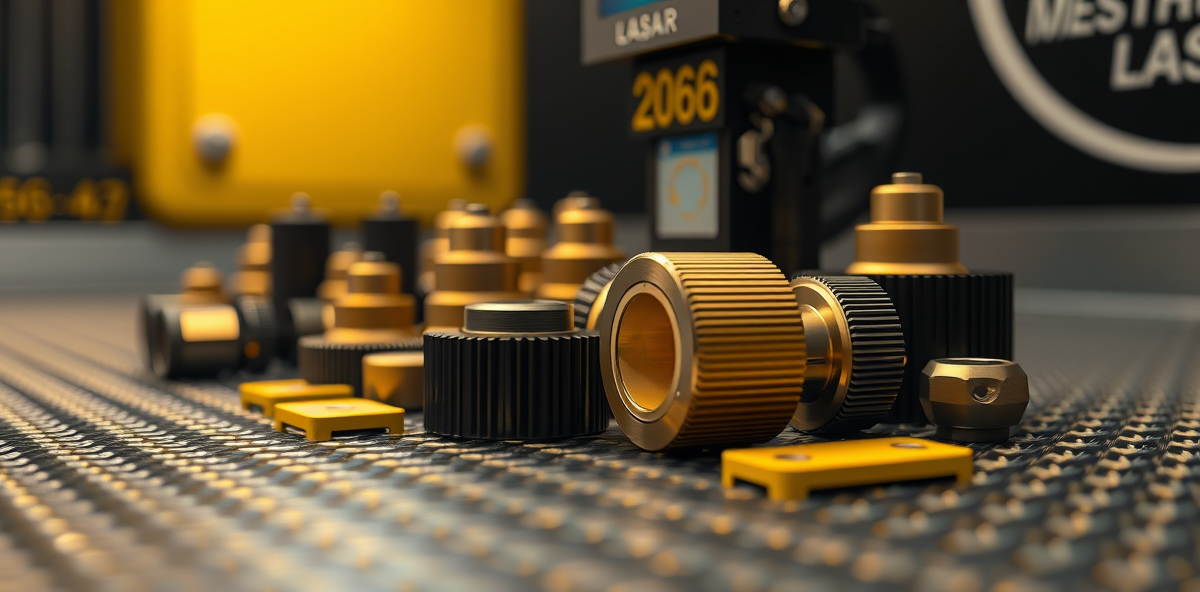
In the dynamic world of metal fabrication, laser cutting machines are indispensableIn today’s fast-paced industrial manufacturing environment, advanced machinery drives precision and efficiency across every sector. However, even the most advanced machine is only as good as its components. The constant demand for high-quality output and minimal downtime makes the strategic stocking of fiber laser cutting consumables and spare parts a critical aspect of operational success. Neglecting this can lead to costly interruptions, compromised cutting quality, and reduced machine lifespan.
For machine users, operators, and metal fabricators, understanding the importance of genuine, high-quality consumables is therefore paramount. This comprehensive buying guide for 2026 explores essential fiber laser cutting consumables, offering practical insights into their function, replacement cycles, and how to optimize their use for peak performance, cost efficiency, and enhanced machine longevity. Furthermore, we highlight trusted brands like Raytools, OSPRI, Precitec, and Fine Focus, ensuring you make informed decisions for your operations.
Download our Free Spare Parts Checklist → to streamline your procurement process and ensure you never miss a critical component.
Why Fiber Laser Cutting Consumables Matter for Your Operations
The intricate process of laser cutting relies on a delicate balance of optical, mechanical, and electrical components working in harmony. Any degradation in these parts — especially fiber laser cutting consumables — directly translates into a significant impact on performance. Moreover, using worn or substandard components can lead to a cascade of problems, from inaccurate cuts and rough edges to complete machine failure.
The True Cost of Low-Quality Fiber Laser Cutting Consumables
The true cost of low-quality parts extends far beyond their purchase price. Frequent replacements due to premature wear, increased scrap material from flawed cuts, and extended machine downtime for repairs all contribute to substantial operational expenses. Consequently, these hidden costs can severely erode profit margins and disrupt production schedules — underscoring the necessity of investing in quality fiber laser cutting consumables from the outset.
How Quality Consumables Drive Machine Efficiency
Genuine and high-quality fiber laser cutting consumables are directly linked to machine efficiency. They ensure consistent laser beam delivery, precise gas flow, and stable electrical connections — all of which are vital for maintaining optimal cutting speeds and achieving the desired finish. As a result, by prioritizing quality consumables, businesses can significantly reduce their total cost of ownership, maximize uptime, and ensure their laser cutting operations remain at the forefront of productivity.
For further reference on laser cutting industry standards, see the International Laser Safety Conference resources and the Laser Institute of America (external resource).
Complete Overview of Fiber Laser Cutting Machine Spare Parts
A fiber laser cutting machine is a complex system, and understanding its key components is therefore essential for effective maintenance and spare parts management. These parts can be broadly categorized into optical, mechanical, electrical, and consumable components. <!– IMAGE: labeled diagram of fiber laser cutting head – nozzle, ceramic ring, lens, protective window –> <!– Alt text: “fiber laser cutting consumables diagram – nozzle ceramic ring lens protective window components” –>
Optical Components — Critical Fiber Laser Cutting Consumables
Optical components are crucial for guiding and focusing the laser beam. They are delicate and require careful handling and regular inspection.
- Focusing Lenses — Perhaps the most critical optical fiber laser cutting consumables, responsible for converging the laser beam to a precise focal point on the material surface. Their quality directly impacts cut precision and edge finish.
- Protective Windows (Cover Slides) — Positioned to shield the focusing lens from spatter and debris, protective windows are consumables that require frequent checks and replacement to maintain beam integrity.
- Collimating Lenses — These lenses ensure the laser beam remains parallel as it travels through the optical path, preparing it for the focusing lens.
- Beam Delivery Mirrors — In some systems, mirrors direct the laser beam from the source to the cutting head. Their reflectivity is vital for power transmission.
Mechanical Parts — Essential for Precision Cutting
Mechanical parts ensure the physical movement and precision of the cutting head.
- Nozzles — Essential for directing assist gas and shaping the laser beam, nozzles are critical for cut quality and piercing performance.
- Bearings and Guide Rails — These components facilitate the smooth and accurate movement of the gantry and cutting head. Wear in these parts can lead to positional inaccuracies.
- Gear Racks and Pinions — Part of the drive system, these ensure precise linear motion of the cutting head along the X and Y axes.
- Height Sensing Systems — These maintain a consistent distance between the nozzle and the material, which is crucial for stable cutting and optimal focus.
Electrical Components — The Control System
The electrical system manages power, control, and communication within the machine.
- Cables and Connectors — Essential for power delivery, signal transmission, and data communication between various machine parts.
- Sensors — Used for position detection, gas pressure monitoring, and safety interlocks, ensuring the machine operates within safe parameters.
- Servo Motors and Drivers — These provide precise motion control for the cutting head and gantry, dictating speed and accuracy.
- Power Supplies — Critical for the laser source and other electrical components, ensuring stable and consistent power delivery.
Consumables — The Most Frequently Replaced Fiber Laser Cutting Parts
- Filters (Air, Water, Gas) — Essential for maintaining the cleanliness of various systems, preventing contamination of optics, cooling systems, and assist gases.
- Ceramic Rings — A vital component in the cutting head, ensuring proper nozzle alignment and electrical insulation.
- Nozzles — As mentioned, these are high-wear items requiring frequent replacement in any fiber laser cutting consumables inventory.
- Protective Windows — These shield expensive lenses and are therefore considered a regular consumable item.
| Part | Function | Replacement Cycle |
|---|---|---|
| Focusing Lens | Focuses laser beam onto material | 6 months to 2 years (or as needed) |
| Protective Window | Shields focusing lens from spatter | Weekly to Monthly |
| Single & Double Nozzle | Directs assist gas, shapes laser beam | Daily to Weekly |
| Ceramic Ring | Insulates, ensures nozzle alignment | Monthly to Quarterly |
| Gas Filter | Removes impurities from assist gas | Quarterly to Annually |
| Water Filter | Maintains coolant purity | Bi-annually to Annually |
| Air Filter | Filters air for machine components | Quarterly to Bi-annually |
| Beam Delivery Mirrors | Directs laser beam | Several years (or as needed) |
Also see our fiber laser machine maintenance checklist for a printable version of this replacement schedule (internal link).
Types of Fiber Laser Cutting Consumables Explained
A deeper understanding of the most frequently replaced fiber laser cutting consumables will illuminate their critical role in the laser cutting process and guide your stocking decisions for 2026.
Nozzles (Single & Double) — The Most Used Fiber Laser Cutting Consumables
Nozzles are at the very heart of the cutting process, responsible for directing the assist gas precisely around the laser beam. Their design and condition therefore profoundly influence cut quality, speed, and efficiency.
- Single Nozzle — Primarily used for cutting thinner materials and for high-pressure inert gas cutting (e.g., nitrogen for stainless steel). The single orifice provides a concentrated gas flow, ideal for producing clean, dross-free cuts.
- Double Nozzle — Features a concentric double orifice design. The outer ring provides a wider, lower-pressure gas flow, often used with oxygen for cutting thicker carbon steel, aiding in the exothermic reaction and slag removal. The inner orifice still focuses the laser beam.
The material and quality of nozzles are paramount. Branded fiber laser cutting consumables from manufacturers like Raytools, OSPRI, and Precitec ensure consistent material composition (typically high-grade copper or chrome-plated copper), precise machining, and optimal bore concentricity. Consequently, using genuine nozzles ensures optimal gas dynamics and beam shaping, preventing premature wear and maintaining cutting performance.
Ceramic Rings — Vital Fiber Laser Cutting Consumables for the Cutting Head
The ceramic ring is a small but vital component within the laser cutting head. Its primary functions are multi-faceted:
- Nozzle Alignment — The ceramic ring precisely holds the nozzle in perfect alignment with the laser beam. Any misalignment due to a worn or damaged ring can lead to off-center cuts, reduced quality, and even damage to the focusing lens.
- Electrical Insulation — It provides electrical insulation for the capacitive height sensing system. This system relies on a stable electrical field between the nozzle and the workpiece to maintain a consistent stand-off distance. A faulty ceramic ring can consequently disrupt this crucial sensing, leading to head crashes or inconsistent cutting heights.
- Gas Flow Path — It also plays a role in channeling the assist gas correctly around the nozzle.
Lenses — High-Precision Fiber Laser Cutting Consumables
Focusing lenses are high-precision optical fiber laser cutting consumables that converge the collimated laser beam into an intense, small spot at the material surface. Their cleanliness and integrity are therefore paramount for cutting performance.
- Material — Typically made from high-purity fused silica for fiber lasers, these lenses are designed to transmit the specific laser wavelength with minimal absorption and distortion.
- Focal Length — Lenses come in various focal lengths, chosen based on the material thickness and desired cut characteristics. A shorter focal length provides a smaller spot size for finer cuts on thinner materials, while a longer focal length offers a larger depth of field, beneficial for thicker materials.
Even microscopic dust particles or slight scratches on the lens surface can cause the laser energy to scatter or absorb, leading to reduced cutting power, uneven cuts, and potentially thermal damage to the lens itself. Protective windows act as a sacrificial layer to extend the life of the more expensive focusing lens. As a result, regular inspection and cleaning of both are non-negotiable.
Signs Your Fiber Laser Cutting Consumables Need Replacement
<!– IMAGE: comparison of worn vs new laser cutting nozzle and ceramic ring –> <!– Alt text: “worn fiber laser cutting consumables – nozzle and ceramic ring replacement signs” –>
Identifying worn or damaged fiber laser cutting consumables early helps prevent costly downtime and maintains consistent cutting quality. Therefore, operators and maintenance staff should watch for these key warning signs:
1. Poor Cutting Quality — The Most Obvious Sign
Poor cutting quality, such as excessive dross, rough edges, or incomplete cuts, is often the first indicator that your fiber laser cutting consumables need attention. These issues are frequently caused by worn nozzles, contaminated lenses, or a faulty ceramic ring.
2. Excessive Burr Formation on Cut Edges
Excessive burr formation may indicate low gas pressure, improper gas flow, or a damaged nozzle. Consequently, this is a clear signal that your nozzle or gas filter needs inspection or replacement.
3. Irregular Sparks or Uneven Cutting Plume
Irregular sparks or an uneven cutting plume can point to nozzle damage, beam misalignment, or assist gas delivery problems. Therefore, early inspection is important to ensure stable performance and accurate cutting.
4. Increased Gas Consumption Without Better Results
Increased gas consumption without better cutting results may suggest leakage caused by worn nozzles or damaged seals — a tell-tale sign that your fiber laser cutting consumables are overdue for replacement.
5. Frequent Head Crashes or Collision Warnings
Unexpected stops, “collision” warnings, or erratic height sensing often indicate a failing ceramic ring that is no longer providing proper electrical insulation for the height sensing system.
6. Reduced Cutting Speed for Standard Operations
If your machine takes longer to cut the same material at the same settings, it could be due to a degraded focusing lens or a worn nozzle aperture in your fiber laser cutting consumables assembly.
OEM vs Aftermarket Fiber Laser Cutting Consumables — Which Should You Choose?
When sourcing fiber laser cutting consumables, manufacturers often face a choice between Original Equipment Manufacturer (OEM) parts and aftermarket alternatives. Each option presents distinct advantages and disadvantages that impact performance, cost, and machine reliability.
| Feature | OEM Parts | Aftermarket Parts |
|---|---|---|
| Quality & Precision | Guaranteed to meet exact specifications; high consistency | Varies widely; may not meet original tolerances |
| Compatibility | Perfect fit and seamless integration with the machine | May require modifications; can lead to suboptimal performance |
| Performance & Efficiency | Ensures original machine performance and cutting quality | Can degrade performance and impact quality |
| Warranty & Support | Often backed by manufacturer’s warranty and expert support | Limited or no warranty; less specialized support |
| Cost | Generally higher initial investment | Lower initial cost, but often higher long-term costs |
| Risk of Damage | Minimal risk due to guaranteed compatibility | Higher risk of machine damage and premature wear |
In summary, while aftermarket parts might offer an attractive lower initial cost, the potential for reduced performance, increased downtime, and even damage to expensive machinery often outweighs these savings. For critical fiber laser cutting consumables like optics, nozzles, and ceramic rings, investing in OEM or reputable branded equivalents from Raytools, Precitec, OSPRI, or Fine Focus is almost always the more cost-effective and reliable long-term strategy.
How to Choose a High-Quality Fiber Laser Cutting Consumables Supplier
Selecting the right supplier for your fiber laser cutting consumables is as crucial as selecting the consumables themselves. A reliable supplier ensures you receive genuine, high-quality parts that maximize your machine’s performance and longevity.
1. Check for Certifications and Quality Standards
Look for suppliers who adhere to international quality standards such as ISO 9001. This indicates a commitment to consistent product quality and reliable processes. Furthermore, certifications often mean traceable sourcing and rigorous quality control for all fiber laser cutting consumables.
2. Verify Brand Compatibility and Authenticity
Ensure the supplier provides fiber laser cutting consumables compatible with your specific machine brand, especially for critical items like Raytools, OSPRI, Precitec, or Fine Focus cutting heads. A reputable supplier will clearly state the brands they support and provide authentic parts. Therefore, be wary of suppliers offering unbranded or suspiciously cheap alternatives for premium components.
3. Evaluate Technical Support and Expertise
A high-quality fiber laser cutting consumables supplier doesn’t just sell parts — they offer expertise. Look for suppliers with knowledgeable technical support teams who can assist with part identification, troubleshooting, and advice on optimal usage. This support can be invaluable when diagnosing performance issues or selecting the right nozzle type.
4. Assess Inventory Levels and Delivery Speed
Check the supplier’s inventory levels and lead times. A good supplier will stock a comprehensive range of fiber laser cutting consumables, including various nozzle types (Single Nozzle and Double Nozzle) and different ceramic ring models — ensuring quick delivery to minimize your downtime.
5. Research Customer Reviews and Industry Reputation
Research the supplier’s reputation within the industry. Online reviews, testimonials, and industry forums can provide valuable insights into their reliability, product quality, and customer service for fiber laser cutting consumables.
6. Ensure Transparent Pricing and Warranty Policies
Choose suppliers with clear pricing structures and transparent warranty policies. This provides assurance against defects and offers recourse if fiber laser cutting consumables do not meet expectations — protecting your investment.
Maintenance Tips to Maximize the Life of Your Fiber Laser Cutting Consumables
Regular and meticulous maintenance is not just about replacing worn parts — it is about proactive care that significantly extends the lifespan of your laser cutting machine and protects your investment in fiber laser cutting consumables.
Clean Lenses and Protective Windows Regularly
The laser’s optical path must be kept pristine. Even microscopic contaminants can absorb laser energy, causing thermal stress and damage to lenses and protective windows. Therefore, use only specified optical cleaning solutions and lint-free wipes. This simple practice prevents costly replacements and maintains beam quality across all your fiber laser cutting consumables.
Check Nozzle Alignment and Condition Daily
The nozzle must be perfectly concentric with the laser beam. Use the appropriate tools to check and adjust alignment daily or before each shift. In addition, inspect the nozzle for spatter buildup, bore erosion, and deformation. A worn Single Nozzle or Double Nozzle will lead to poor cut quality and inefficient gas usage.
Follow Recommended Fiber Laser Cutting Consumables Replacement Cycles
Adhere to the recommended replacement schedules for items like ceramic rings, nozzles, filters, and protective windows. Do not wait for complete failure. Proactive replacement, as a result, prevents cascading issues and maintains consistent output quality from your fiber laser cutting consumables.
Maintain Cleanliness of the Cutting Head Assembly
Keep the entire cutting head assembly clean and free of metal spatter, dust, and debris. This includes the area around the ceramic ring and nozzle attachment points — both of which are critical fiber laser cutting consumables that are sensitive to contamination.
Inspect and Lubricate Guide Rails and Bearings
Lubricate and clean guide rails and linear bearings according to the manufacturer’s schedule. Smooth motion is crucial for cutting accuracy and extends the effective life of all connected fiber laser cutting consumables.
Monitor Gas and Water Systems Consistently
Regularly check assist gas pressure and purity. Furthermore, ensure the chiller unit for the laser source is functioning optimally, maintaining the correct coolant temperature and flow. Replace water filters as recommended to protect your entire fiber laser cutting consumables system.
Keep Software and Firmware Updated
Keep your machine’s control software and firmware updated to benefit from performance enhancements, bug fixes, and new features that can further optimize the performance of your fiber laser cutting consumables.
Book a Maintenance Consultation → with our experts to get tailored advice and professional service for your laser cutting machine.
Cost Optimization Strategy for Fiber Laser Cutting Consumables
While investing in quality is key, smart purchasing and maintenance strategies can significantly optimize costs associated with fiber laser cutting consumables and spare parts.
Buy Fiber Laser Cutting Consumables in Bulk
Purchasing frequently used fiber laser cutting consumables like Single Nozzles, Double Nozzles, and protective windows in larger quantities can often unlock volume discounts from suppliers. Moreover, this reduces the per-unit cost and ensures a steady supply — preventing last-minute emergency orders that incur higher prices and expedited shipping fees.
Implement a Preventive Maintenance Schedule
Proactive maintenance is a primary cost-saving strategy for fiber laser cutting consumables. By regularly cleaning optics, checking alignment, and replacing parts before they fail, you prevent more significant, expensive damage and unplanned downtime. Consequently, this reduces repair costs, extends the life of expensive components, and maximizes machine uptime.
Invest in Genuine and Branded Fiber Laser Cutting Consumables
While aftermarket parts may seem cheaper upfront, their inferior quality often leads to shorter lifespans, compromised cutting quality (resulting in scrap), and potential damage to the machine. Therefore, investing in genuine Raytools, OSPRI, Precitec, or Fine Focus fiber laser cutting consumables ensures optimal performance, fewer replacements, and greater reliability — ultimately providing a lower total cost of ownership.
Use an Inventory Management System
Implement an efficient inventory management system to track usage rates of different fiber laser cutting consumables. This helps in predicting demand, optimizing stock levels, and avoiding overstocking (which ties up capital) or understocking (which leads to costly downtime). For more on this, also see our spare parts inventory management guide (internal link).
Train Operators on Proper Consumable Care
Well-trained operators can reduce premature wear on fiber laser cutting consumables by following proper machine operation and maintenance practices. As a result, operator training is one of the most cost-effective investments a fabrication business can make.
Applications: Fiber Laser Cutting Consumables Across Key Industries
Laser cutting technology, underpinned by reliable fiber laser cutting consumables, serves a vast array of industries. Each benefits from its precision, speed, and versatility. <!– IMAGE: collage of laser cutting applications – automotive, aerospace, medical, sheet metal –> <!– Alt text: “fiber laser cutting consumables applications – automotive aerospace medical sheet metal fabrication” –>
Automotive Industry
Laser cutting is vital for producing vehicle components, from chassis parts and interior elements to specialized brackets and prototypes. The precision of a well-maintained machine, supported by quality fiber laser cutting consumables such as nozzles and ceramic rings, ensures high-quality, repeatable cuts essential for safety and performance standards.
Sheet Metal Fabrication
This is arguably the largest consumer of laser cutting services. From architectural panels and HVAC ducting to custom enclosures and industrial equipment components, laser cutting offers unparalleled flexibility. Therefore, reliable fiber laser cutting consumables are essential for continuous, high-volume production in this sector.
Aerospace Industry
Demanding extremely high precision and material integrity, aerospace manufacturers utilize laser cutting for intricate parts from lightweight alloys. Consequently, the consistent beam quality and accuracy provided by genuine fiber laser cutting consumables and optics are non-negotiable where failure is not an option.
Electronics Manufacturing
For precision cutting of thin metals and other materials used in electronic devices, laser cutting offers minimal thermal distortion and fine detail. Fiber laser cutting consumables like pristine lenses and precise nozzles are key to preventing component damage.
Medical Device Manufacturing
The production of small, intricate, and often biocompatible components for medical devices relies heavily on the clean and precise cuts achievable only with optimally performing fiber laser cutting consumables.
Art and Decorative Metalwork
Laser cutting allows artists and designers to create complex, detailed metal pieces with unmatched precision. Furthermore, quality fiber laser cutting consumables ensure the fine detail and smooth edges required for aesthetic appeal.
Frequently Asked Questions About Fiber Laser Cutting Consumables
Q1: How often should I replace my laser cutting nozzle? The replacement frequency for your Single or Double Nozzle depends on factors like material type, power settings, assist gas purity, and cut quality requirements. For high-volume production of fiber laser cutting consumables, daily or even multiple replacements per day are common. For less intensive use, weekly replacement might suffice.
Q2: What is the function of a fiber laser ceramic ring? The ceramic ring serves multiple critical functions among fiber laser cutting consumables: it precisely aligns the nozzle with the laser beam, provides electrical insulation for the capacitive height sensing system, and helps guide the assist gas. Its integrity is therefore vital for cut quality, accurate height sensing, and preventing head crashes.
Q3: How do I know if my focusing lens needs cleaning or replacement? Signs your focusing lens needs attention include reduced cutting power, inconsistent cut quality, visible burns or streaks on the lens surface, or a hazy appearance. Regular inspection and cleaning with appropriate optical solutions are crucial for all fiber laser cutting consumables in the optical path. If cleaning doesn’t restore performance or if visible damage persists, replacement is necessary.
Q4: What are the main benefits of using genuine fiber laser cutting consumables from Raytools or Precitec? Using genuine fiber laser cutting consumables from reputable brands like Raytools, OSPRI, Precitec, or Fine Focus ensures optimal machine performance, consistent cutting quality, extended machine lifespan, reduced downtime, and better cost efficiency over time. These parts are manufactured to precise specifications — guaranteeing compatibility and reliable operation that generic alternatives often cannot match.
Conclusion: Make Fiber Laser Cutting Consumables a Strategic Priority in 2026
As we move through 2026, the competitive landscape of industrial manufacturing demands not just advanced machinery, but also intelligent operational strategies. A well-managed inventory of top-quality fiber laser cutting consumables and spare parts is not merely an expense — it is a strategic investment that directly impacts your bottom line, productivity, and market reputation.
Moreover, from the precision of Single and Double Nozzles to the insulating properties of the ceramic ring, every component plays a vital role in achieving superior cutting results. By understanding the functions of critical parts, recognizing signs of wear, and choosing reputable suppliers of genuine fiber laser cutting consumables — such as those from Raytools, OSPRI, Precitec, and Fine Focus — metal fabricators and machine operators can significantly enhance machine efficiency.
Furthermore, implementing a diligent maintenance regimen and smart procurement strategy allows businesses to optimize costs, maintain consistent high-quality output, and achieve a lower total cost of ownership. As a result, don’t underestimate the power of proactive stocking and quality assurance for your fiber laser cutting consumables.
In conclusion, whether you are a B2B buyer, a machine operator, or a metal fabricator, investing in genuine fiber laser cutting consumables is one of the most impactful decisions you can make for your operations in 2026 and beyond.
Related Articles:
How to Choose the Right Nozzle for Your Laser Cutter (internal link)
Fiber Laser Machine Maintenance Checklist (internal link)
Spare Parts Inventory Management for Fabricators (internal link)



Write a comment
Your email address will not be published. All fields are required