

Introduction
Precision and efficiency are essential in industrial manufacturing. However, even advanced fiber laser cutting systems depend on every component working well. Worn parts and low-quality consumables cause downtime, poor cut quality, and lost revenue. Therefore, understanding the role of each component — especially laser consumables like lenses — is essential for operational excellence.
This guide explores fiber laser cutting consumables, focusing on lens types and their industrial uses. In addition, we explain how choosing high-quality spare parts can improve performance, reduce costs, and boost efficiency. Use this guide to ensure your laser cutting operations run flawlessly.
Download our Spare Parts Checklist to optimize your machine’s performance!
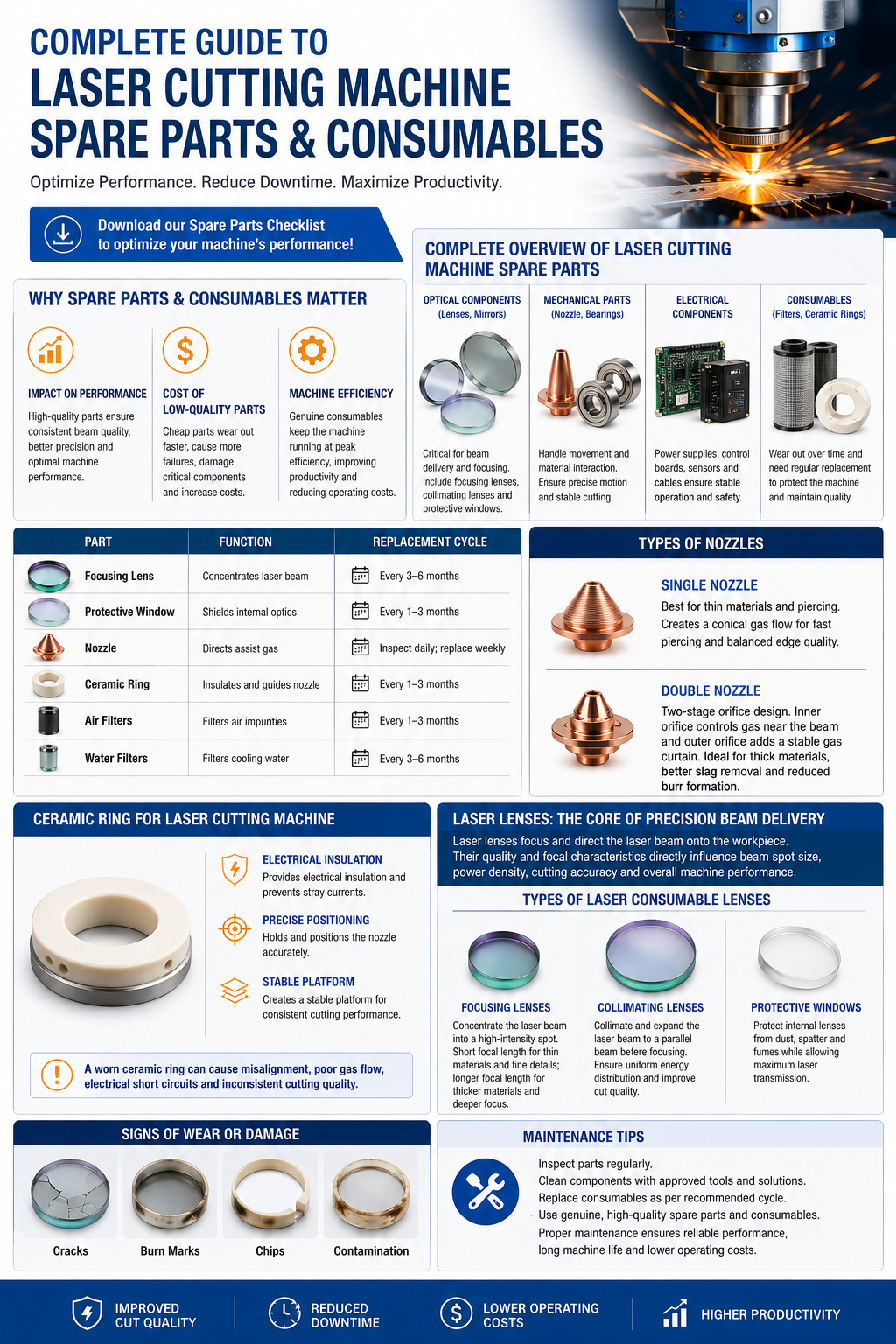
Why Spare Parts and Consumables Matter in Laser Cutting
Impact on Performance
The quality and condition of spare parts directly affect machine performance. Every component — from the optical lens to the nozzle — shapes and focuses the laser beam. As a result, worn or inferior parts cause inconsistencies, reduce beam quality, and lower cutting precision. In contrast, high-quality components keep the laser system at peak performance.
Cost of Low-Quality Parts
Cheaper aftermarket parts may seem cost-effective at first. However, they tend to fail sooner, which means more frequent replacements and higher procurement costs. Worse, they can damage expensive machine components, leading to prolonged downtime. Consequently, the true cost of low-quality parts goes far beyond their purchase price.
Machine Efficiency
Consistent parts improve overall machine efficiency. Genuine consumables help the laser operate within designed parameters. For example, a well-aligned lens and a precise nozzle together support faster cutting speeds and better material use. This directly translates to higher productivity and lower operating costs.
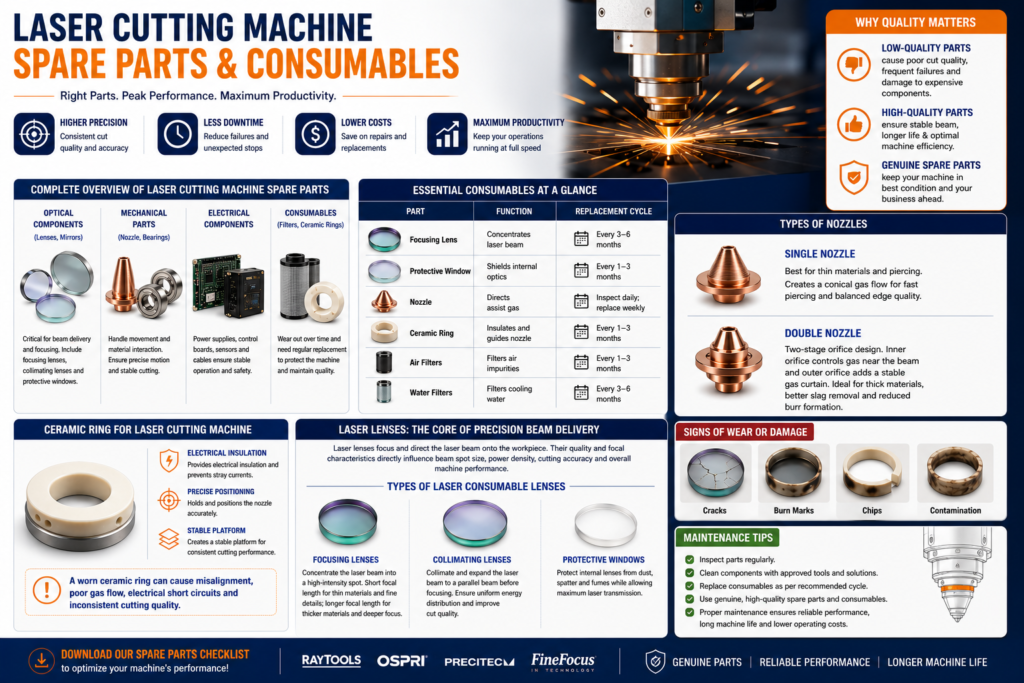
Complete Overview of Laser Cutting Machine Spare Parts
A fiber laser cutting machine includes many components, each vital to its operation. Understanding these parts is the first step toward effective maintenance.
Optical Components (Lenses, Mirrors)
These are the most critical parts for beam delivery. Focusing lenses concentrate the laser beam onto the material. Meanwhile, protective windows shield internal optics from spatter and fumes. Collimating lenses shape the beam before it enters the cutting head. Brands like Raytools, OSPRI, Precitec, and Fine Focus are trusted for optical quality.
Mechanical Parts (Nozzle, Bearings)
Mechanical parts handle movement and material interaction. Nozzles direct the assist gas and shape the laser beam exit point. Bearings support smooth, precise cutting head movement. These components must be durable enough for continuous industrial use.
Electrical Components
This category covers power supplies, control boards, sensors, and cables. They power the laser source, control machine movements, and monitor operations. A malfunction in any electrical component can cause system failures and significant downtime.
Consumables (Filters, Ceramic Rings)
Consumables wear out over time and need regular replacement. These include air filters, water filters, gas filters, and ceramic rings. They maintain machine cleanliness and protect more expensive parts from damage.
| Part | Function | Replacement Cycle |
| Focusing Lens | Concentrates laser beam | Every 3–6 months |
| Protective Window | Shields internal optics | Every 1–3 months |
| Nozzle | Directs assist gas | Inspect daily; replace weekly |
| Ceramic Ring | Insulates and guides nozzle | Every 1–3 months |
| Air Filters | Filters air impurities | Every 1–3 months |
| Water Filters | Filters cooling water | Every 3–6 months |
Types of Laser Cutting Consumables Explained
Among all fiber laser cutting consumables, nozzles, ceramic rings, and lenses are the most critical. They interact directly with the laser beam and the material being cut.
Nozzles (Single and Double Nozzle)
Nozzles direct the assist gas co-axially with the laser beam onto the workpiece. The nozzle orifice size and shape control gas flow and the laser interaction zone. Consequently, nozzle choice directly affects cut quality, speed, and the heat-affected zone.
- Single Nozzle: Best for thin materials and piercing. It creates a conical gas flow for fast piercing and balanced edge quality.
- Double Nozzle: Features a two-stage orifice. The inner orifice controls gas flow near the beam, while the outer orifice adds a stable gas curtain. This design works well for thick materials, improving slag removal and reducing burr formation.
Ceramic Ring for Laser Cutting Machine
The ceramic ring — also called a nozzle holder or insulator — serves three key functions. First, it provides electrical insulation. Second, it positions the nozzle precisely. Third, it creates a stable platform for cutting. Without it, stray electrical currents can interfere with cutting head electronics.
Brands like Raytools, OSPRI, and Precitec offer durable ceramic rings. A worn ring leads to nozzle misalignment, poor gas flow, and even electrical short circuits. Therefore, timely replacement is critical for consistent results.
Laser Lenses: The Core of Precision Beam Delivery
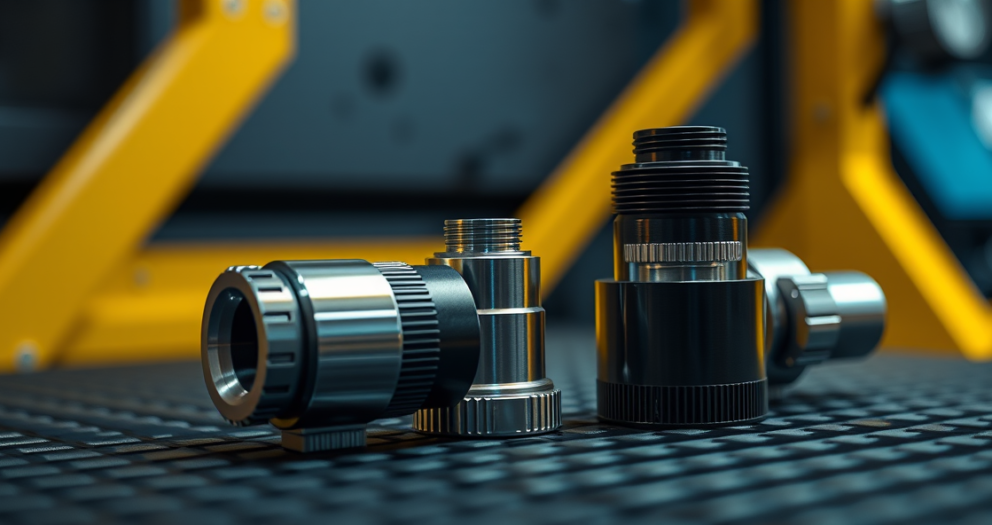
Laser lenses are critical optical components in fiber laser cutting systems, responsible for focusing and directing the laser beam onto the workpiece. Their quality, design, and focal characteristics directly influence beam spot size, power density, cutting accuracy, and overall machine performance.
Types of Laser Consumable Lenses
Focusing Lenses
Focusing lenses concentrate the laser beam into a high-intensity spot for cutting. Different focal lengths are used depending on material thickness and application requirements. Short focal lengths are ideal for thin materials and fine-detail cutting, while longer focal lengths provide greater depth of field for thicker materials.
Protective Windows (Cover Slides)
Protective windows shield internal optics from spatter, fumes, and debris generated during cutting. Manufactured from high-quality optical materials with anti-reflective coatings, they help maintain beam quality and reduce power loss. Routine inspection and timely replacement are essential for consistent performance.
Collimating Lenses
Collimating lenses convert the divergent beam exiting the fiber cable into a parallel beam before it reaches the focusing lens. This process ensures accurate beam delivery, improved cutting precision, and stable cutting results.
Beam Expander Lenses
Used in advanced laser systems, beam expanders increase beam diameter to reduce stress on downstream optics, improve beam quality, and support specialized cutting applications.
Industrial Applications
- Sheet Metal Fabrication: Moderate focal length lenses provide an ideal balance of cutting speed and edge quality for steel, stainless steel, and aluminum.
- Thick Plate Cutting: Longer focal length lenses offer greater depth of field, enabling cleaner cuts through thicker materials.
- Fine Cutting and Micro-Machining: Short focal length lenses create smaller beam spots for intricate designs and minimal heat-affected zones.
- Marking and Engraving: Specialized lenses produce precise spot sizes and beam profiles for high-quality engraving results.
- Specialty Materials: Materials such as copper and brass require lenses with advanced anti-reflective coatings and high damage resistance to manage back-reflections effectively.
Signs Your Laser Spare Parts Need Replacement
Catching component wear early prevents costly downtime and keeps cutting quality high. Watch for these warning signs:
Poor Cutting Quality
Rough edges, excess dross, uneven cuts, or reduced precision often indicate worn nozzles or damaged lenses.
Excessive Burr Formation
Burrs along the cut edge suggest insufficient laser power, poor gas flow, or damaged nozzles and protective windows.
Irregular Sparks
A stable process produces consistent sparks. Erratic or excessive sparking may signal nozzle, ceramic ring, or optical component issues.
Reduced Cutting Speed
If cutting the same material takes longer than usual, degraded lenses or worn nozzles may be limiting beam quality.
Frequent Machine Alarms
Repeated pressure, temperature, or beam alarms often indicate component wear that needs immediate attention.
Discolored or Damaged Optics
Cloudy, scratched, burned, or discolored lenses reduce beam quality. Additionally, they can damage other optical components.
Higher Gas Consumption
A damaged nozzle or improperly seated ceramic ring can cause gas leakage, which drives up operating costs.
Regular inspection and timely replacement of consumables — such as lenses, nozzles, and ceramic rings — maintain cutting accuracy and extend machine life.
OEM vs. Aftermarket Spare Parts
Choosing between OEM and aftermarket parts is a key decision for laser machine owners. Both options differ in quality, reliability, and long-term value.
OEM parts are made by the original equipment manufacturer or approved suppliers. They meet exact machine specifications, ensuring a precise fit and consistent performance. Moreover, they typically include warranty protection and technical support. Although OEM parts cost more upfront, they often reduce long-term expenses by minimizing downtime.
Aftermarket parts are made by third-party manufacturers and designed to fit various machine brands. They are usually less expensive initially. However, quality varies widely. Some parts may not match original specifications, which can lead to reduced performance and higher maintenance costs over time.
Key Differences
- Quality and Performance: OEM parts guarantee specifications; aftermarket quality varies.
- Reliability: OEM components last longer and deliver more consistent results.
- Cost: Aftermarket parts cost less upfront, but OEM parts often offer better long-term value.
- Warranty and Support: OEM products include manufacturer warranties and technical assistance.
- Risk: OEM parts minimize compatibility issues; aftermarket parts can increase performance risk.
For critical consumables — such as lenses, nozzles, and ceramic rings — investing in genuine OEM or branded components helps maintain cutting quality and reduces unexpected downtime.
How to Choose a High-Quality Spare Parts Supplier
Selecting the right supplier is just as important as choosing the right parts. A reliable supplier ensures you receive genuine components that keep operations running smoothly.
- Certifications and Quality Assurance: Look for suppliers with ISO certifications and clear quality control processes. This is especially important for optical components like lenses and ceramic rings.
- Brand Compatibility and Expertise: A good supplier understands various laser brands and cutting head technologies — including Precitec, Raytools, OSPRI, and Fine Focus. They should help you find the exact part for your machine model.
- Technical Support and After-Sales Service: Reliable suppliers offer knowledgeable staff for part identification, installation, and troubleshooting. Clear return policies and warranties are also signs of a trustworthy supplier.
- Inventory and Availability: Fast parts availability minimizes downtime. Therefore, choose a supplier that maintains a comprehensive inventory of essential consumables.
- Reputation and Reviews: Research customer testimonials and online reviews. A supplier with a proven track record is always the safer choice.
MaintMaintenance Tips to Increase Machine Life
Regular maintenance is essential for maximizing the lifespan and performance of your fiber laser cutting machine. A proactive approach helps prevent unexpected breakdowns, reduces repair costs, and maintains consistent cutting quality.
- Clean Lenses and Protective Windows: Remove dust and contaminants regularly using approved optical cleaning solutions and lint-free wipes. Clean optics ensure optimal laser transmission and prevent thermal damage.
- Check Nozzle Alignment: Inspect nozzles daily for wear, blockages, or damage. Proper alignment improves gas flow, cutting accuracy, and overall performance.
- Replace Consumables on Time: Change protective windows, nozzles, and ceramic rings according to recommended schedules. Timely replacement helps avoid sudden failures and quality issues.
- Monitor the Cooling System: Verify that the chiller maintains the correct operating temperature. Check coolant levels and filters regularly to prevent overheating and component damage.
- Inspect Guide Rails and Bearings: Keep rails clean and properly lubricated. Examine bearings for wear to ensure smooth and accurate cutting head movement.
- Perform Periodic Calibration: Regularly check laser beam alignment and cutting head calibration. Proper alignment minimizes power loss and ensures consistent cutting results.
- Update Machine Software: Install manufacturer-recommended software and firmware updates to improve performance, reliability, and system functionality.
Consistent maintenance not only extends machine life but also enhances productivity, cutting precision, and operational efficiency. Scheduling regular inspections and servicing can help keep your laser cutting machine operating at peak performance for years to come.
Cost Optimization Strategy
Cutting costs in laser cutting does not mean cutting corners. Instead, it means planning smart and maintaining diligently.
- Buy Consumables in Bulk: For items like nozzles, protective windows, and ceramic rings, bulk purchasing lowers unit costs and ensures parts are always available.
- Follow Preventive Maintenance Schedules: Regular inspections and timely part replacements extend component life and avoid expensive reactive repairs.
- Use Genuine Branded Consumables: While the upfront cost is higher, genuine parts from Raytools, Precitec, OSPRI, or Fine Focus last longer and prevent damage to expensive components.
- Train Your Operators: Well-trained operators identify issues early, perform basic maintenance correctly, and optimize cutting parameters. As a result, consumable wear decreases and material use improves.
- Optimize Material Nesting: Use advanced nesting software to maximize material use and reduce scrap. This directly lowers raw material costs.
Applications and Industry Use Cases
Fiber laser cutting technology serves many industries because of its precision, speed, and versatility.
- Automotive Industry: Fiber lasers cut high-strength steel, aluminum, and composites for body parts, chassis elements, and interior features. Consequently, genuine consumables are critical for repeatable, high-quality results.
- Sheet Metal Fabrication: This is the most common application. Fiber lasers cut stainless steel, mild steel, aluminum, brass, and copper for HVAC ducts, electrical enclosures, furniture, and architectural elements.
- General Fabrication and Job Shops: Small and large fabrication shops use fiber laser cutters for custom orders, short runs, and complex geometries across agriculture, construction, and signage industries.
- Medical Device Manufacturing: Fiber lasers produce intricate instruments and implants from biocompatible metals with extremely tight tolerances.
- Aerospace Industry: High-performance alloys for aircraft components require extreme accuracy. Premium lenses from Precitec and Fine Focus meet these stringent requirements.
FAQs
How often should laser cutting lenses be replaced?
Replacement frequency depends on usage and material type. Protective windows typically last 1–3 months. Focusing lenses can last 3–6 months with proper care. Regular inspections for scratches, burns, or cloudiness help determine when to replace.
What is the difference between single and double nozzles?
Single nozzles provide a conical gas flow and work well for thin materials and piercing. Double nozzles create a stable gas curtain, making them better for thick materials, improved slag removal, and enhanced cut quality.
Why is a ceramic ring important in laser cutting?
A ceramic ring provides electrical insulation, positions the nozzle accurately, and directs assist gas flow. In addition, it maintains cutting stability and prevents electrical interference.
Can aftermarket laser consumables reduce costs?
Aftermarket parts may have a lower purchase price. However, they can result in shorter lifespans, inconsistent performance, and higher long-term costs. Branded or OEM parts generally offer better value over time.
What are the benefits of genuine laser lenses?
Genuine lenses deliver superior beam transmission, accurate focusing, and longer service life. These advantages result in better cut quality, faster processing speeds, and reduced material waste.
How does maintenance help reduce operating costs?
Regular cleaning, timely consumable replacement, and strict maintenance schedules prevent premature wear and costly repairs. Furthermore, proper maintenance extends machine life and maintains consistent cutting performance.
Conclusion
In industrial manufacturing, small details often make the biggest difference. The quality and maintenance of fiber laser cutting consumables — particularly lenses, nozzles, and ceramic rings — are central to your operation’s success. They directly influence cut precision, machine longevity, and overall cost efficiency.
By investing in genuine, high-quality spare parts from trusted brands like Raytools, OSPRI, Precitec, and Fine Focus, you give your machines the best chance to perform at their peak. Moreover, following rigorous maintenance protocols and understanding each consumable’s specific role helps minimize downtime and prevent costly repairs.
Take action today. Elevate your production standards and secure your competitive edge.
- Request a Quote for genuine fiber laser cutting consumables.
- Talk to an Expert for personalized advice.
- Download our Catalog of all available spare parts.

Write a comment
Your email address will not be published. All fields are required