Search

Why 100% Genuine Laser Spare Parts Matter for Your Laser Cutting Machine

Ever watched $50,000 worth of precision metal parts warp and distort because someone installed a cheap knockoff lens in a laser cutting machine? The maintenance supervisor who made that call to "save" $500 probably wishes they hadn't.

The difference between genuine laser spare parts and counterfeit alternatives isn't just about brand loyalty – it's about protecting a significant investment.

When cutting precision matters down to the micron, laser spare parts quality makes all the difference between perfect production runs and costly scrap piles. The industrial laser cutting industry thrives on consistency, and that consistency starts with the components inside the machine.

But what exactly makes genuine parts worth the premium? And how can machine operators identify counterfeits before they damage equipment worth more than some homes?

The Critical Role of Genuine Parts in Laser Performance

How Authentic Parts Maximize Cutting Precision

Genuine laser parts are engineered to exact specifications that match the original design parameters of the cutting machine. When non-genuine parts enter the equation, even microscopic deviations can lead to significant precision issues. A focus lens that's off by mere micrometers can cause beam distortion, resulting in jagged edges and inaccurate cuts.

Testing shows that machines running with 100% genuine components maintain a cutting tolerance within ±0.05mm, while those with aftermarket parts often drift to ±0.2mm or worse. This precision difference might seem small on paper but becomes glaringly obvious in finished products.

Impact on Operational Speed and Efficiency

Authentic parts create a performance ecosystem where each component works in harmony. This synchronization allows machines to operate at peak speeds without sacrificing quality.

The efficiency difference becomes clear in production environments:

Performance MetricWith Genuine PartsWith Non-Genuine Parts
Cutting Speed100% capacity 70-85% capacity
Setup TimeMinimalExtended
DowntimePredictableFrequent/Unexpected
Power ConsumptionOptimizedTypically Higher

Extending Your Machine's Overall Lifespan

Laser cutting machines represent substantial investments. Genuine parts protect this investment by ensuring proper load distribution and optimal operating conditions. The stress placed on surrounding components decreases dramatically when each part functions exactly as designed.

Non-genuine parts often create a domino effect of wear and tear. What starts as a simple replacement can cascade into systemic failures requiring major repairs or premature replacement of the entire system.

Maintaining Consistent Output Quality

Quality consistency separates professional-grade output from amateur results. Genuine parts maintain calibration longer and perform more predictably under varying conditions. This translates to identical cuts on the first workpiece and the thousandth.

Many operators discover the false economy of aftermarket parts when client rejections increase due to inconsistent quality. The variations might be subtle at first—slightly different edge finishes or minimal dimensional differences—but they compound over time, damaging reputation and increasing waste.

Safety Risks of Non-Genuine Laser Components

Potential Machine Damage from Counterfeit Parts

Using non-genuine parts in a laser cutting machine isn't just cutting corners—it's risking the entire system. Counterfeit components often lack proper material composition and precise manufacturing tolerances that OEM parts guarantee. When these substandard parts are installed, they can trigger a cascade of technical failures. A single non-genuine mirror with improper reflective coating can redirect beam energy incorrectly, potentially damaging optical pathways and sensitive electronics. Counterfeit nozzles with incorrect apertures alter gas flow dynamics, causing inconsistent cutting and accelerated deterioration of surrounding components.

The financial impact extends far beyond the initial "savings." Downtime from machine failures typically costs manufacturers $1,000-$10,000 per hour, making that discounted part exponentially more expensive in the long run.

Workplace Hazards and Liability Concerns

The safety risks of counterfeit laser components extend well beyond machine performance. Unauthorized parts frequently bypass rigorous safety testing, creating serious workplace hazards:

● Improperly sealed components can leak cooling water into electrical systems
● Counterfeit safety interlocks may fail to prevent accidental beam exposure
● Non-genuine lenses can shatter under normal operating conditions

From a liability standpoint, machine warranties become void when non-OEM parts are installed. Insurance claims related to accidents or injuries may be denied if investigations reveal counterfeit components were a contributing factor.

Case Studies of Failures from Non-OEM Parts

A metal fabrication shop in Detroit learned this lesson after installing a non-genuine focusing lens that fractured during operation, sending shards into the workspace and narrowly missing an operator. The subsequent investigation revealed the counterfeit lens lacked proper heat treatment, making it unable to withstand normal thermal stress.

Another documented case involved a California sign manufacturer whose laser experienced catastrophic failure when a non-genuine power supply delivered voltage spikes that damaged multiple system components. The resulting repair costs exceeded $28,000, while production delays cost an additional $45,000 in lost business.

A European automotive parts supplier reported that counterfeit air assist nozzles caused irregular cutting patterns, resulting in a 30% scrap rate before the issue was identified. The cumulative waste and rework expenses exceeded the cost of genuine components by a factor of 12.

Long-Term Cost Benefits of Authentic Laser Parts

Reduced downtime and maintenance frequency

Investing in genuine laser spare parts directly translates to significantly less machine downtime. Authentic components typically last 2-3 times longer than aftermarket alternatives. This difference becomes particularly noticeable in high-volume production environments where machines run continuously.
When cutting operations stop unexpectedly, it costs more than just replacement parts. Each hour of downtime can cost thousands in lost production, idle workers, and missed deadlines. Authentic parts maintain tighter tolerances for longer periods, extending maintenance intervals and keeping machines running when they're needed most.

Lower total ownership costs despite higher initial investment

The sticker shock of genuine laser parts often drives buyers toward cheaper alternatives. This approach backfires consistently in the long run.

Cost FactorGenuine PartsNon-Genuine Parts
Initial CostHigherLower
Replacement FrequencyLow2-4x higher
Machine Lifespan ImpactExtends useful lifeAccelerates depreciation
Resale Value Maintains betterSignificantly reduced

Machines maintained with authentic components retain up to 25% higher resale value and typically deliver 2-3 additional years of productive service before major overhauls become necessary.

Avoiding costly repairs from component failures

When non-genuine parts fail, they rarely fail alone. A substandard focusing lens doesn't just affect cut quality—it can damage the entire optical path. A counterfeit nozzle doesn't just wear prematurely—it can compromise the entire cutting head.
These cascading failures multiply costs dramatically. What starts as saving $200 on a part can easily balloon into $10,000+ in comprehensive repairs. The most expensive failures often stem from the cheapest parts.

Warranty protection advantages

OEM parts maintain warranty coverage that extends beyond the component itself. Many manufacturers now track part usage through machine diagnostics and service records.
Using authentic parts preserves warranty claims on the entire system, protects service agreements, and maintains access to technical support resources. This protection delivers particularly high value during critical production periods when immediate assistance becomes essential.

How to Identify Genuine Laser Spare Parts

Procurement professionals and maintenance managers can avoid counterfeit risks by following key verification steps:

● Authentication Markers

Look for serial numbers, holograms, or QR codes that link to OEM databases. These identifiers are often laser-etched onto the part.

● Authorized Dealer Networks

Purchase only from certified suppliers like Lasercart, who provide OEM documentation and factory-backed assurances.

● Documentation and Certification

Genuine parts come with datasheets, material certifications, and compatibility verifications. Always request and retain these records for auditing and warranty purposes.

Optimizing Performance Through Strategic Parts Replacement

Proactively managing laser system components ensures both performance and longevity.

● Critical Components to Prioritize

Focus on optics (lenses, mirrors), nozzles, and beam delivery components. These directly impact cut quality and system stress.

● Preventative Maintenance Schedules

Implement part replacement intervals based on duty cycles, not just reactive failure. Use OEM guidelines to forecast wear rates.

● Partner with Certified Providers

Engage trusted suppliers like Lasercart for access to authorized technicians, reliable inventory, and product support.

● Inventory Management Best Practices

Maintain a small reserve of high-wear parts and log usage for trend analysis. Digital inventory tools integrated with supplier platforms help minimize downtime risk.

Conclusion

When the cost of laser cutting downtime, inconsistent output, and system failure is high, there is no substitute for genuine spare parts. They preserve precision, maximize efficiency, and protect capital investments. For manufacturing leaders serious about quality and ROI, trusting reliable suppliers like Lasercart isn’t optional—it’s essential.

Take action today:

Equip your laser cutting operations with verified, OEM-certified parts from Lasercart.co and secure the performance your bottom line depends on.


Keep Your Laser Cutting Machine Running Smoothly with Original Spare Parts

In today’s fast-paced manufacturing landscape, where precision and productivity go hand-in-hand, laser cutting machines have become indispensable. Whether you're working with metals, plastics, or composites, a laser cutting machine can deliver high-speed, clean, and accurate cuts. But just like any advanced piece of machinery, laser cutters demand proper care and maintenance to remain at peak performance. And one of the most important elements in that maintenance is using original spare parts.

From the nozzle to the focus lens, every component inside a laser cutter plays a crucial role. Using genuine parts not only enhances the performance of your machine but also extends its life, reduces unexpected breakdowns, and ensures consistent production quality.

Let’s dive deep into why using original spare parts is essential and how you can keep your laser cutting machine running smoothly for years to come.

Why Original Spare Parts Matter

Original spare parts are designed specifically for the machine models they support. These parts undergo rigorous quality control, are made from premium materials, and are built to last.

1. Precision & Compatibility

Each laser cutting machine is engineered with high precision. Original spare parts are manufactured to exact specifications, ensuring seamless compatibility. When you replace a worn-out nozzle, lens, or sensor with an original part, you restore the machine to its intended performance level.

2. Machine Longevity

Using non-original parts may seem cost-effective initially, but these components often lack durability. Over time, repeated failures and misalignments can cause long-term damage to the machine. On the other hand, original parts are built to perform consistently over extended use, reducing wear and tear.

3. Reduced Downtime

Downtime is expensive. Whether it’s for scheduled maintenance or unexpected breakdowns, every hour of stoppage costs productivity and profits. Original parts fit right the first time, reducing installation errors and getting your machine back online faster.

4. Operator Safety

Laser machines operate with high energy, and any malfunction can be hazardous. Original parts comply with safety standards and reduce the risk of accidents caused by faulty replacements or material failure.

5. Consistent Cutting Quality

From micro cuts to large sheet fabrication, quality matters. Any imperfection in spare parts like the focus lens or ceramic ring can compromise beam alignment and cutting accuracy. Original parts preserve the high-quality standards your business depends on.

The Most Critical Spare Parts to Monitor

Laser cutting machines have several components that are subject to wear and degradation over time. Let’s take a look at the key spare parts that should always be monitored and replaced with genuine alternatives.

1. Nozzles

The nozzle directs the laser beam and assists gas flow for clean, sharp cuts. Worn or clogged nozzles can result in slag buildup, poor edge quality, and burn marks.

Recommended: Use high-precision double layer nozzles for clean kerf edges, especially when cutting stainless steel or aluminum.

2. Focus Lens

A pristine focus lens ensures the laser beam remains concentrated and sharp. Dust, smoke, and thermal stress can cloud or damage the lens over time, impacting beam quality.

Look for a focus lens with a cartridge assembly to simplify replacement and alignment.

3. Collimating Lens and Cover Glass

The collimating lens shapes the beam before focusing. It’s often protected by a cover glass. If the glass is scratched, dirty, or damaged, it can scatter the beam and reduce efficiency.

Replace cover glass regularly to maintain beam quality and protect your internal optics.

4. Ceramic Ring

A ceramic ring insulates the nozzle and maintains electrical conductivity in the cutting head. Cracks, thermal damage, or erosion of this part can compromise cutting stability.

Choose ceramic rings with high heat resistance and precise fitting to avoid damage to the torch.

5. Protective Filters

Filters in the cooling and air circulation systems prevent dust and particles from entering the sensitive components of the laser machine. A clogged or dirty filter can cause overheating or component failure.

Change your filter every 2–3 months to ensure proper airflow and temperature regulation.

6. Sensor Units (Axis Limit Sensors)

Axis limit sensors prevent your machine’s moving parts from exceeding design limits. Faulty sensors can lead to calibration issues or even physical damage to the rails and gantries.

Replace sensors immediately upon detection of inaccuracies or machine halting errors.

When Should You Replace Laser Machine Spare Parts?

Even with regular cleaning and preventive maintenance, certain parts must be replaced on a schedule. Here’s a general guideline:

Spare PartInspection FrequencyReplacement Frequency
Focus LensWeeklyEvery 1–2 Months
Cover GlassWeeklyEvery 2–4 Weeks
NozzleWeeklyBased on wear/tear
Ceramic RingMonthlyEvery 3–6 Months
FiltersMonthlyEvery 2–3 Months
Limit SensorsMonthlyWhen malfunctioning

Keep a maintenance log to track the last replacement date and performance status of each part. This will help you spot early signs of degradation and plan replacements proactively.

Tips to Prolong the Life of Spare Parts

While replacement is inevitable, proper care can stretch the lifespan of original parts and save money:

  1. Clean Your Optics Regularly
    Use lens cleaning swabs or buds to gently wipe off dust or vapor deposits.
  2. Avoid Manual Alignment Errors
    When replacing parts like lenses or nozzles, ensure proper alignment tools are used.
  3. Use Only Approved Coolants and Gases
    The purity of assist gases (like nitrogen or oxygen) affects internal component health.
  4. Handle Parts with Care
    Optics and ceramics are delicate. Use gloves and anti-static tools during installation.
  5. Keep Spare Stock On Hand
    Store a few essential original parts in your facility to reduce downtime during emergencies.

Real-World Impact of Using Original Parts

Manufacturers using original spare parts have reported:

  • Up to 25% reduction in maintenance downtime
  • 30% longer lifespan of consumables
  • Enhanced operator safety with fewer cutting errors
  • Consistent quality in high-volume production batches

Whether you run a small fabrication unit or a high-throughput industrial plant, these gains directly translate into higher profits and improved reputation.

How to Identify Original Spare Parts

Not all spare parts are created equal. Here's how to spot genuine components:

  • Packaging: Authentic parts come in high-quality, sealed packaging with part codes and lot numbers.
  • Branding: Manufacturer name or logo is usually engraved or printed on the product.
  • Material Quality: Original parts have smoother finishes, superior materials, and tighter tolerances.
  • Performance Test: Upon installation, genuine parts deliver immediate improvements in beam focus, speed, or cut accuracy.

Always source parts from verified dealers or suppliers that specialize in laser machines. Avoid bulk or discounted listings that lack proper documentation.

Product Spotlight: Recommended Genuine Laser Spare Parts

Here are a few premium spare parts that are engineered to keep your machine in top condition:

  • Ceramic Ring for LC208/LC80 Series
    Designed for durability and perfect beam alignment during high-speed cuts.
  • High-Purity Cover Glass for Collimating Lens
    Essential to protect internal lenses from smoke and dust during cutting operations.
  • Nozzles for Fiber Laser Cutting (Double Layer)
    Excellent for stainless steel and aluminum; helps maintain gas pressure and beam focus.
  • Focus Lens with Cartridge Assembly
    Easy to install, clean, and align — ideal for consistent cutting quality.
  • Lens Cleaning Swabs (Pack of 100)
    Soft, non-abrasive cleaning buds specifically made for delicate optics.
  • Axis Limit Sensor – Universal Fit
    Protects machine motion paths and ensures calibration stays intact.

Having these parts readily available will not only reduce the hassle of last-minute sourcing but also ensure uninterrupted operations.

Conclusion

Your laser cutting machine is the heartbeat of your production line. Its performance directly affects your product quality, delivery timelines, and business reputation. By choosing original spare parts, you make an investment in reliability, safety, and long-term efficiency.

Don’t compromise the integrity of your machine with counterfeit or low-grade components. Maintain a healthy stock of genuine consumables and schedule routine checks. With the right approach, your laser machine will continue to deliver precision and power for years to come.

Keep it original. Keep it cutting. Keep your production smooth.

A comparison-themed graphic showing a laser cutting machine on the left and a man using traditional cutting tools on the right, with the title 'Laser Cutting vs Traditional Cutting Methods: Pros and Cons' and the Lasercart.co logo at the top.

Laser Cutting vs Traditional Cutting Methods: Pros and Cons

Laser Cutting vs Traditional Cutting Methods: Pros and Cons

Introduction

Cutting is a very important step in many industries. It is used in making metal parts, wooden items, plastic sheets, and more. There are different ways to cut materials. Two common methods are laser cutting and traditional cutting.

In this blog, we will explain what these methods are, how they are different, and what are the good and bad sides of each. If you use laser cutting machines, you will also learn why using the right spare parts and consumables is important to keep your machine working well.

A laser cutting machine cutting through a sheet of metal

What is Laser Cutting?

Laser cutting is a modern method. It uses a strong light beam (called a laser) to cut through metal, wood, plastic, and other materials. A computer controls the machine, so it cuts very clean and accurate shapes.

Laser cutting machines need special parts like nozzles, lenses, mirrors, and filters to work properly. These are called spare parts and consumables. They wear out over time and need to be replaced.

A man sawing a piece of wood

What is Traditional Cutting?

Traditional cutting is the old way of cutting. It uses tools like saws, blades, scissors, or gas torches. These tools are used by hand or with machines. This method is good for simple cutting jobs.

Pros of Laser Cutting

  1. Very Accurate
    The laser cuts exactly where it should. This is good for detailed designs.
  2. Smooth Edges
    The cut edges look neat and clean. No need for extra work to make them smooth.
  3. Fast Cutting
    Laser cutting is quick, especially for big jobs or repeated shapes.
  4. Less Material Waste
    Because it is so accurate, less material is wasted.
  5. No Contact with Material
    The laser does not touch the material, so there is less chance of damage.
  6. Easy to Repeat Same Shape
    Once a design is saved in the computer, it can cut the same shape again and again.

Cons of Laser Cutting

  1. Machine is Costly
    Laser cutting machines are expensive. But they save time and give better results.
  2. Needs Electricity
    These machines use more power than traditional tools.
  3. Needs Trained People
    People must know how to use and maintain the machine.
  4. Parts Need Regular Replacement
    To keep the machine working well, parts like lenses, nozzles, and filters must be changed on time.

Pros of Traditional Cutting

  1. Cheaper Tools
    Tools like saws and cutters are not expensive.
  2. Simple to Use
    Anyone can use these tools with little training.
  3. Good for Small Jobs
    For small or one-time work, these tools are enough.
  4. Cuts Very Thick Materials
    Some thick metals are easier to cut with gas torches or heavy saws.

Cons of Traditional Cutting

  1. Not Very Accurate
    Manual cutting can be less precise.
  2. Rough Edges
    The edges may not look clean and need extra work.
  3. Slow for Big Jobs
    Cutting many pieces by hand takes a lot of time.
  4. Tools Wear Out Quickly
    Saws and blades get dull and need repair or replacement.

Comparison Table: Traditional Cutting vs Laser Cutting

FeatureTraditional CuttingLaser Cutting
Cutting MethodUses manual tools like saws, blades, or torchesUses a focused laser beam controlled by a computer
AccuracyLess accurate, depends on operator skillHighly accurate, computer-guided cutting
Edge FinishRough edges, needs polishing or sandingClean and smooth edges, minimal post-processing
SpeedSlower, especially for complex or large jobsFast and efficient, even for complex shapes
Material WasteMore waste due to rough cuts and errorsLess waste due to precise cutting
Setup CostLow cost for toolsHigh initial cost for machines
Ease of UseSimple, easy to learn and use manuallyRequires training and technical knowledge
Suitability for RepetitionHard to repeat same cuts perfectlyEasy to repeat cuts with same design
MaintenanceTools wear out and need sharpeningNeeds spare parts like nozzles, lenses, and filters
Best ForSmall or simple jobs, one-time useLarge volume, high precision, and professional jobs

Why Laser Cutting is Better for Many People

Laser cutting has become the go-to choice for many industries and individuals — and for good reason. It offers several advantages that traditional cutting methods simply can't match. Here’s why laser cutting stands out:

  • Speed: Laser cutters work fast, making them ideal when you need quick turnaround times.
  • Precision: They deliver incredibly accurate cuts, even on complex shapes or intricate designs.
  • Clean Edges: Laser cutting produces smooth, burr-free edges, often eliminating the need for post-processing.
  • Repeatability: Whether it’s one piece or a thousand, laser cutters can produce the same exact shape every time.

From prototyping to mass production, laser cutting is a reliable and efficient solution for all kinds of cutting needs.

Keep Your Machine in Good Shape

Assorted laser cutting machine spare parts and consumables including nozzles, lenses, and ceramic rings arranged on a display

To get the best results from your laser cutting machine, you need to take care of it. This means changing some parts regularly. Here are the most important ones:

Laser Nozzles

Nozzles help the laser hit the right spot. If they are old or dirty, the laser may not cut properly. Change them on time for clean and smooth cutting

Laser Lenses

Lenses focus the laser beam. A dirty or damaged lens can make the cut weak or uneven. Clean or replace them when needed for the best power and accuracy.

Laser Mirrors

Mirrors guide the laser beam to the cutting area. If they are not clear, the beam loses strength. Keep them clean or replace them to get full cutting power.

Filters

Filters keep dust, smoke, and tiny particles out of the machine. If filters are clogged, the machine may overheat or slow down. Change filters often for smooth running.

At lasercart.co, we provide all these spare parts and more. We help keep your laser cutting machine working like new. To know more about laser machine spare parts and consumables you can read this blog- https://www.lasercart.co/blog/consumables-guide-lasercart/ 

Conclusion

Both laser cutting and traditional cutting have their good and bad points. Traditional cutting is good for simple, small, or low-budget jobs. Laser cutting is better for fast, clean, and exact results.

If you are already using a laser cutting machine, make sure you use the right parts and consumables. This will save you time, reduce machine problems, and give better cutting results.

If you need laser cutting machine spare parts or help choosing the right products? Call Lasercart now at 8866608444. We are happy to help you!

Focus Lenses vs Protective Lenses: What’s the Difference and Why It Matters

Don’t let a scratched lens ruin your laser cutting precision! Learn the key differences between focus and protective lenses in our latest blog. Shop top-quality lenses at www.lasercart.co now—stock is limited, so act fast! Call +91 88666 08444 today!

Find the Perfect Fiber Laser Consumables for Your Laser Cutting Head

Introduction

If you want your laser cutting machine to work at its best, you need to use the right consumables. These are small parts that wear out over time, and they need to be replaced regularly. Choosing the correct ones can improve cutting quality, speed, and the life of your machine. This guide will help you understand what these parts are, how to pick the right ones, and why they matter.

Laser cutting machine slicing through metal sheet with sparks flying in a manufacturing setting

What Are Fiber Laser Consumables?

Consumables are parts of the laser cutting system that get used up during regular operation. They include:

  • Nozzles – Guide the gas and laser to the material
  • Focus Lens – Focuses the laser beam to cut precisely
  • Protective (Cover) Lens – Protects the focus lens from damage
  • Collimating Lens – Helps shape the laser beam before it reaches the focus lens
  • Ceramic Ring – Holds the nozzle and helps maintain stable cuts
  • Fiber Protection Cap – Shields the fiber from dust and damage
  • Cleaning Accessories – Items like buds and wipes used to clean lenses

Each part plays an important role in making sure that laser cuts cleanly, quickly, and safely every time.

Assorted laser consumables including nozzles, lenses, and protective windows used in laser cutting systems

How to Choose the Right Consumables

To choose the right consumables, there are several things you need to consider:

1. Compatibility with Your Cutting Head

Not all consumables fit all machines. Different brands like RayTools, Precitec, WSX, or IPG have different shapes, sizes, and thread types. Always check your machine’s model and make sure the consumables match exactly.

2. Sizes and Codes You Should Know

Here are some common sizes:

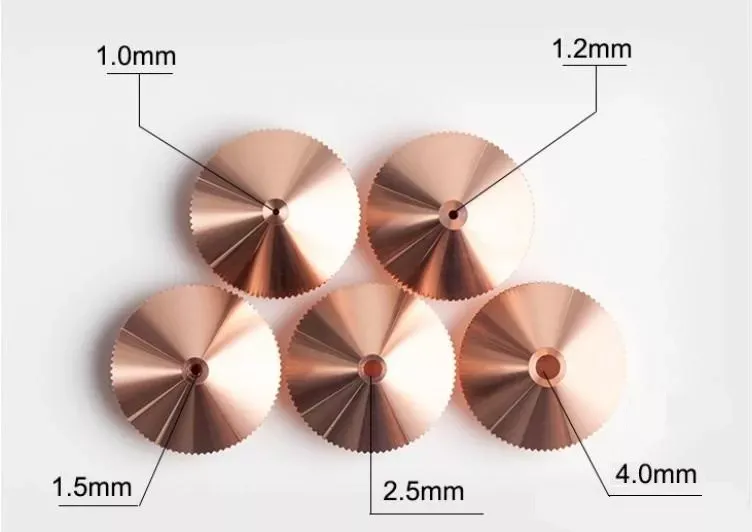
Five copper laser cutting nozzles of varying aperture sizes labeled 1.0mm, 1.2mm, 1.5mm, 2.5mm, and 4.0mm arranged on a white background
  • Nozzles:
    • Outer diameter: 28mm, 32mm, 35mm
    • Inner hole size: 0.8mm to 4.0mm
    • Thread types: M11, M14, M16
  • Focus Lens:
    • Size: 25mm x 4mm, 28mm x 4mm
    • Focus distance: 63.5mm, 100mm, 125mm
  • Protective Lens:
    • Sizes: 22mm x 4mm, 20mm x 3mm, 27.9mm x 4.1mm
  • Ceramic Rings:
    • The ceramic ring must match your nozzle holder exactly

3. Material Type and Thickness

The kind of material you cut and how thick it is also matters.

  • Thin materials need smaller nozzle openings (like 1.0mm)
  • Thick plates need larger nozzles (like 2.0mm or more)
  • Mild steel with oxygen – Use conical nozzles
  • Stainless steel or aluminum with nitrogen – Use double-layer nozzles

4. Assist Gas

The type of gas you use (oxygen, nitrogen, or air) affects the nozzle you need. The size of the nozzle opening changes how gas flows, which affects the cut quality.

5. Material Quality and Coating

Better materials last longer. Lenses should have anti-reflective coatings to reduce energy loss. Nozzles made of copper with nickel coating resist heat and last longer.

Why Picking the Right Consumables Is Important

Using the wrong consumables might still fit your machine, but they can cause a lot of problems, such as:

  • Rough or uneven edges
  • More leftover material (dross)
  • Slower cutting speeds
  • Damage to expensive parts like lenses
  • More gas usage

Getting the right parts helps you cut better, work faster, and keep your machine running longer.

Always Keep These in Stock

To avoid delays or downtime, always keep these items in your stock:

  1. Nozzles (as per your laser head size)
  2. Protective lenses (you’ll replace these often)
  3. Focus lenses (good to have as backup)
  4. Ceramic rings
  5. Collimating lenses (important but not replaced as often)
  6. Cleaning tools like buds and swabs
  7. Fiber protection caps

Buy Smart with LaserCart.co

At LaserCart.co, we make it easy to find the right fiber laser consumables. We provide high-quality spare parts that work with all major cutting heads. Here you can order all the spare parts online or our team can also help you in ordering:

  • Match part numbers and specs
  • Pick the right nozzle size for your laser head
  • Find lenses with the correct coatings
  • Restock before something breaks

We keep a large stock and offer expert help so you can order with confidence.

Final Thoughts: The Right Parts Make All the Difference

Your machine is only as good as the parts you put in it. By choosing the right consumables and keeping backups ready, you reduce downtime and get better results. You should not wait for the problems to happen, instead you should always stay ready with the right parts from LaserCart.co.

Ready to order? Shop now at www.lasercart.co or call +91 88666 08444 to get started!

We’re here to help you get the right parts fast. High quality, reliable service, and quick delivery; every time.

CNC Laser Cutting Machine for Sheet Metal: Maintenance and Online Spare Parts Ordering

CNC laser cutting machines have revolutionized sheet metal processing, providing high precision, efficiency, and flexibility. Industries ranging from automotive and aerospace to construction and electronics rely on CNC laser cutting technology for intricate designs, rapid production, and cost-effectiveness. However, to maintain consistent performance, regular maintenance and timely replacement of spare parts are crucial. This blog explores CNC laser cutting machines for sheet metal, best maintenance practices, and how to order spare parts from LaserCart.co without losing machine man-days.

CNC Laser Cutting Machine for Sheet Metal: Maintenance and Online Spare Parts Ordering

CNC laser cutting machines have revolutionized sheet metal processing, providing high precision, efficiency, and flexibility. Industries ranging from automotive and aerospace to construction and electronics rely on CNC laser cutting technology for intricate designs, rapid production, and cost-effectiveness. However, to maintain consistent performance, regular maintenance and timely replacement of spare parts are crucial. This blog explores CNC laser cutting machines for sheet metal, best maintenance practices, and how to order spare parts from LaserCart.co without losing machine man-days.

Understanding CNC Laser Cutting Machines for Sheet Metal

CNC (Computer Numerical Control) laser cutting machines utilize high-powered lasers to cut sheet metal with extreme precision. These machines are ideal for cutting stainless steel, aluminum, mild steel, copper, and brass with minimal material waste. They offer several advantages:

  • High Precision: CNC-controlled operations ensure accurate cuts with minimal errors.
  • Speed & Efficiency: Faster than traditional cutting methods, reducing production time.
  • Flexibility: Capable of handling various metal types and thicknesses.
  • Automation: Integration with CAD/CAM software allows seamless design implementation.
  • Minimal Material Waste: Advanced laser technology optimizes material utilization.

Best Practices for Maintaining a CNC Laser Cutting Machine

Proper maintenance ensures prolonged machine life, optimal performance, and reduced downtime. Follow these essential maintenance steps:

1. Daily Maintenance Routine

  • Clean the Lens and Mirrors: Dust and debris can accumulate on the laser optics, reducing cutting efficiency. Clean the lenses and mirrors daily with a recommended optical cleaner.
  • Check the Nozzles and Gas Flow: Ensure nozzles are free from obstructions and the assist gas (oxygen, nitrogen, or compressed air) is flowing correctly.
  • Inspect Cooling System: Maintain proper coolant levels and ensure the chiller is functioning efficiently to prevent overheating.
  • Lubricate Moving Parts: Bearings, guide rails, and ball screws should be regularly lubricated to prevent friction-induced wear.

2. Weekly Maintenance Checks

  • Inspect the Laser Source: Check power levels and stability to ensure consistent laser output.
  • Examine Belt Tension: Loose or worn-out belts affect precision and should be adjusted or replaced if necessary.
  • Monitor Cutting Bed & Slats: Remove accumulated slag and replace damaged slats to maintain cutting accuracy.

3. Monthly Preventative Measures

  • Check Electrical Components: Inspect connections, fuses, and wiring for any signs of wear or overheating.
  • Evaluate Air Filtration System: Replace air filters in the dust extraction system to maintain clean airflow.
  • Software Updates: Keep control software updated for improved performance and bug fixes.

4. Annual Overhaul & Servicing

  • Professional Inspection: Schedule a full professional servicing to check laser alignment, replace critical wear components, and recalibrate the system.
  • Machine Alignment: Verify the entire system’s calibration to maintain precision.
  • Replace Aging Parts: Proactively replace parts that show signs of wear, even if they are still functional.

How to Order CNC Laser Cutting Machine Spare Parts Online Without Losing Machine Man-Days

Downtime due to malfunctioning or worn-out parts can lead to significant losses in production. Ordering laser cutting machine spare parts online from LaserCart.co ensures minimal disruption and continuous operation.

Step 1: Identify the Required Spare Parts

Before placing an order, determine which part needs replacement. Some commonly replaced parts include:

  • Laser Lenses & Mirrors: For maintaining beam accuracy.
  • Nozzles & Ceramic Holders: Ensuring precise gas flow.
  • Protective Windows & Filters: Protecting sensitive optical components.
  • Guide Rails & Bearings: For smooth movement of the laser head.
  • Cooling System Components: Water pumps and chillers.
  • Electronic Components: Sensors, control boards, and relays.

Step 2: Find Compatible Parts on LaserCart.co

  1. Visit LaserCart.co – A dedicated platform for laser cutting machine spare parts.
  2. Search by Model & Brand – Use the machine model and brand to find the right components.
  3. Browse Categories – Look through various categories such as optics, mechanical parts, cooling systems, and electrical components.
  4. Use the Spare Parts Finder – Input your machine specifications to filter compatible parts.

Step 3: Place an Order with Express Shipping

To avoid delays, select express shipping options available on LaserCart.co:

  • Standard Shipping: 3-5 business days.
  • Express Shipping: 24-48 hours for urgent requirements.
  • Bulk Orders: Special delivery options for high-volume purchases.

Step 4: Maintain a Spare Parts Inventory

To prevent unexpected breakdowns, keep a stock of frequently used spare parts. LaserCart.co offers bulk purchase discounts, ensuring cost savings while keeping essential components in reserve.

Step 5: Schedule Installation & Testing

Once the parts arrive:

  1. Follow Manufacturer Guidelines – Ensure proper installation using manuals or expert support.
  2. Test the Machine – Run calibration tests to confirm the new component is functioning correctly.
  3. Resume Operations – With minimal downtime, production can continue smoothly.

Why Choose LaserCart.co for Your Spare Parts?

  • Wide Range of Parts: Covers all major CNC laser cutting machine brands.
  • Guaranteed Compatibility: Ensure the right fit for your machine.
  • Fast Shipping: Reduces machine downtime.
  • Bulk Order Discounts: Cost-effective solutions for manufacturers.
  • Expert Support: Technical assistance for installation and troubleshooting.

Conclusion

CNC laser cutting machines for sheet metal offer unmatched precision and efficiency, making them indispensable in modern manufacturing. However, regular maintenance and timely replacement of spare parts are essential to maximize productivity. By following a structured maintenance routine and ordering spare parts online from LaserCart.co, manufacturers can avoid costly machine downtime and ensure seamless operations. Stay proactive with your maintenance strategy and keep your CNC laser cutting machine running at peak performance!

Back to Top